
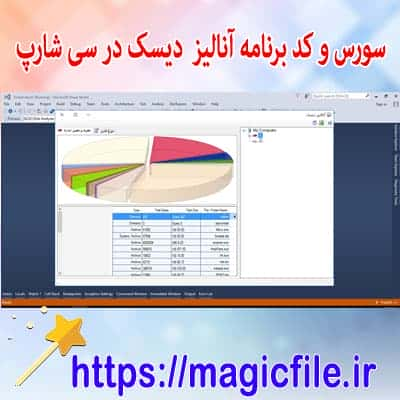
ANALYZER DISK WITH C#: A COMPLETE AND COMPREHENSIVE GUIDE
In the realm of software development, especially when working with applications that handle large data storage or system diagnostics, understanding disk analysis becomes crucial. One of the most effective ways to implement such functionality is through creating an analyzer disk tool using C#. This guide aims to cover all aspects, from the fundamental concepts to the detailed implementation steps, ensuring you grasp the entire picture.
INTRODUCTION TO DISK ANALYZER AND ITS IMPORTANCE
Disk analyzers serve as vital utilities that allow users and developers to assess the health, performance, and structure of storage devices. They can detect fragmentation, analyze disk space consumption, and even predict potential failures. Implementing such a tool with C# leverages the power of the .NET framework, which provides comprehensive classes and methods for interacting with hardware components, especially disks.
UNDERSTANDING THE ARCHITECTURE OF A DISK ANALYZER
Building a disk analyzer involves multiple components working harmoniously. First, there must be a way to access disk information at a low level. Second, an efficient data processing module is necessary to interpret raw data. Third, the user interface (UI) component enables users to view insights clearly and interactively. Lastly, error handling and system compatibility features ensure robustness.
USING C# AND .NET FRAMEWORK FOR DISK INTERACTION
C# provides a variety of classes in the System.IO namespace, such as DriveInfo, to facilitate disk-related operations. For more advanced functions, such as reading disk sectors directly, one may need to invoke native Windows API functions through PInvoke. This approach allows low-level disk access, which is essential for detailed analysis like fragmentation or bad sector detection.
ACCESSING DISK INFORMATION WITH DRIVEINFO
The DriveInfo class offers properties such as Name, DriveType, IsReady, TotalSize, and AvailableFreeSpace. These properties allow you to gather high-level data about each disk connected to the system. For example:
csharp

DriveInfo[] allDrives = DriveInfo.GetDrives();

foreach (DriveInfo d in allDrives)

{

    Console.WriteLine($"Drive {d.Name}");

    Console.WriteLine($"Type: {d.DriveType}");

    if (d.IsReady)

    {

        Console.WriteLine($"Volume Label: {d.VolumeLabel}");

        Console.WriteLine($"File System: {d.DriveFormat}");

        Console.WriteLine($"Size: {d.TotalSize / (1024 * 1024 * 1024)} GB");

        Console.WriteLine($"Free Space: {d.AvailableFreeSpace / (1024 * 1024 * 1024)} GB");

    }

}
This snippet provides a basic overview, but for deep analysis, you'll need to extend functionality.
READING LOW-LEVEL DISK SECTORS
Moving beyond high-level abstractions, reading disk sectors requires invoking Windows API functions like CreateFile, DeviceIoControl, and ReadFile. These APIs allow the application to open raw disk handles and perform read/write operations directly, which is essential for analyzing fragmentation or bad sectors.
For example, to open a disk handle:
csharp

IntPtr handle = CreateFile(

    @"\\.\PhysicalDrive0",

    GENERIC_READ,

    FILE_SHARE_READ | FILE_SHARE_WRITE,

    IntPtr.Zero,

    OPEN_EXISTING,

    0,

    IntPtr.Zero);
Once the handle is obtained, you can send control codes via DeviceIoControl to gather detailed disk information or read specific sectors.
PERFORMING DISK FRAGMENTATION ANALYSIS
Fragmentation analysis involves scanning the disk to detect non-contiguous file parts, which can slow down system performance. This process typically involves reading the Master File Table (MFT) in NTFS systems or similar structures in other file systems.
Implementing fragmentation detection requires parsing file system metadata, which can be complex. However, some third-party libraries or Windows APIs like FSCTL_GET_RETRIEVAL_POINTERS can assist in retrieving the extents of files on disk.
MONITORING DISK HEALTH AND S.M.A.R.T. DATA
A critical aspect of disk analysis is monitoring disk health through S.M.A.R.T. (Self-Monitoring, Analysis, and Reporting Technology). Accessing S.M.A.R.T. data involves sending specific control commands to the disk driver and interpreting the returned data structures.
In C#, this typically requires PInvoke calls to DeviceIoControl with the appropriate control codes like SMART_GET_VERSION, SMART_SEND_DRIVE_COMMAND, or SMART_READ_DATA. Parsing the S.M.A.R.T. data gives insights into potential failures, temperature, reallocated sectors, and more.
BUILDING THE USER INTERFACE
A clean, user-friendly UI is essential. Using Windows Forms or WPF, you can design dashboards displaying disk space usage, fragmentation levels, health status, and detailed logs. Adding graphical elements like pie charts for space distribution or bar graphs for fragmentation improves user comprehension.
For example, in a Windows Forms application, you might include:
- ListBox to list all drives.
- ProgressBar to display free vs. total space.
- DataGridView for detailed SMART data.
- Buttons for refresh, scan, or repair functions.
ERROR HANDLING AND SYSTEM COMPATIBILITY
Any disk analyzer must gracefully handle errors, such as inaccessible disks, permission issues, or hardware failures. Implement try-catch blocks extensively and verify disk readiness before performing operations.
Moreover, compatibility across different Windows versions and hardware configurations should be tested. Use conditional compilation or version checks to adapt functionalities accordingly.
PERFORMANCE OPTIMIZATION AND BEST PRACTICES
Reading raw disk sectors can be time-consuming. To optimize performance:
- Use asynchronous programming with async/await.
- Read data in chunks rather than byte-by-byte.
- Cache frequently accessed data.
- Provide progress indicators during long operations.
Adopting these practices ensures a smoother user experience and reduces system resource strain.
CONCLUSION AND FUTURE ENHANCEMENTS
Creating a disk analyzer with C# is a multifaceted project that combines high-level .NET classes with low-level system API calls. It requires understanding disk structures, Windows API intricacies, and user interface design. The framework described here provides a comprehensive starting point, but future enhancements could include:
- Real-time monitoring.
- Automated repair functions.
- Integration with cloud backup solutions.
- Support for various file systems beyond NTFS.
By following this detailed guide, developers can build robust, efficient, and insightful disk analysis tools tailored to various needs.
IN SUMMARY
Developing an analyzer disk with C# demands a thorough grasp of both hardware interactions and software design principles. It involves combining high-level abstractions with low-level API calls, managing error scenarios gracefully, and presenting data effectively. With meticulous planning and implementation, such a tool not only aids in system maintenance but also enhances understanding of underlying storage mechanisms.
---
Error, Try Again.