
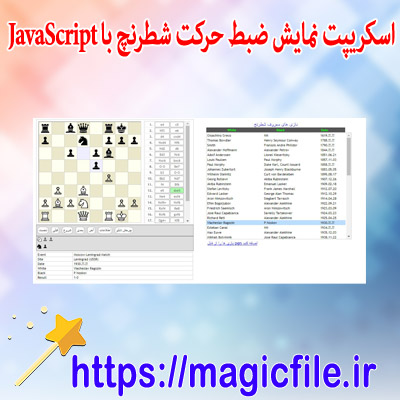
CHESS PGN: A COMPLETE AND COMPREHENSIVE EXPLORATION
In the intricate and fascinating world of chess, where strategic depth and tactical brilliance intertwine, the significance of game notation cannot be overstated. Among the various formats available, Chess PGN (Portable Game Notation) stands out as a fundamental and universally adopted standard for recording, sharing, and analyzing chess games. This comprehensive guide delves into the multifaceted nature of PGN, exploring its history, structure, practical applications, advantages, and the pivotal role it plays within the global chess community.
HISTORICAL BACKGROUND AND DEVELOPMENT
The genesis of PGN traces back to the early days of digital chess, a period marked by the necessity for a standardized, lightweight, and human-readable format. Before PGN's inception, many players and programmers relied on ad hoc notations, which often led to inconsistencies and difficulties in exchanging game data. Recognizing these limitations, a consortium of chess developers and enthusiasts collaborated to establish a unified format, culminating in the formalization of PGN in the late 20th century.
The primary motivation behind PGN was to bridge the gap between human-readable game records and machine-readable data. Its design aimed to facilitate easy recording of games, seamless sharing across platforms, and straightforward parsing by chess software. Over the years, as digital chess expanded exponentially—driven by online platforms, databases, and engines—the importance of a robust notation system became apparent. Today, PGN serves as the backbone for countless chess databases, online repositories, and analysis tools, enabling millions of players and researchers worldwide to access an immense wealth of game history.
STRUCTURE AND COMPONENTS OF PGN
At its core, PGN is a plain-text format, emphasizing simplicity and readability. Its structure comprises two primary sections: the Tag Pair Section and the Move Text Section. Each plays a crucial role in encapsulating information about the game.
- Tag Pair Section: Located at the beginning of the PGN file, this section includes metadata tags enclosed within square brackets. These tags provide essential information such as event name, site, date, round, white and black player names, their ratings, time controls, and result. For example:
  [Event "World Chess Championship"]

  [Site "London"]

  [Date "2023.05.20"]

  [Round "1"]

  [White "Grandmaster A"]

  [Black "Grandmaster B"]

  [Result "1-0"]
- Move Text Section: Following the tags, the move sequence is recorded in standard algebraic notation. Moves are numbered, with White’s move typically preceding Black’s. For example:
1. e4 e5 2. Nf3 Nc6 3. Bb5 a6
This section concludes with the game result, either explicitly stated or implied through the move sequence.
Beyond these basic components, PGN allows optional data such as comments, variations, annotations, and even graphical diagrams. Comments are enclosed within curly braces `{}` and can provide insights into specific moves or positions, while variations offer alternative lines, enriching the depth of analysis. This flexibility makes PGN not just a record but a versatile tool for teaching, study, and entertainment.
ADVANTAGES AND PRACTICAL APPLICATIONS
The primary advantage of PGN lies in its universality and simplicity. Because it is plain text, PGN files are lightweight, easy to create, edit, and share across diverse platforms. This openness fosters collaboration among players, coaches, and developers, enabling the seamless exchange of game records.
Furthermore, PGN's compatibility with numerous chess programs—such as ChessBase, SCID, Arena, and online platforms like Lichess and Chess.com—cements its role as a standard format. Players and analysts can import and export games effortlessly, facilitating in-depth study and preparation. The format also supports extensive databases, allowing users to search for specific openings, players, or positions efficiently.
In addition to practical functionality, PGN plays a vital role in the preservation of chess history. It serves as an archival medium, ensuring that games from tournaments, casual matches, and historical encounters are preserved accurately for future generations. Researchers utilize PGN to analyze trends, opening popularity, and player performance over time, enriching the broader understanding of chess evolution.
HOW PGN ENHANCES CHESS EDUCATION AND ANALYSIS
Chess educators leverage PGN to craft lessons, annotate games, and prepare instructional materials. By embedding comments and variations within PGN files, teachers can guide students through complex positions, illustrating strategic ideas and tactical motifs. The format’s readability makes it accessible even to beginners, fostering a deeper appreciation of the game's intricacies.
Moreover, advanced players and engines utilize PGN for analysis. Engines can parse PGN files to evaluate positions, suggest improvements, and generate alternative lines. The combination of human commentary and engine analysis within PGN creates a comprehensive learning environment, blending intuition and computation seamlessly.
CHALLENGES AND LIMITATIONS
Despite its advantages, PGN has certain limitations. Its plain-text nature, while advantageous for simplicity, can lead to large file sizes when storing extensive game collections with numerous variations and comments. Additionally, the format lacks strict enforcement of structure, which can sometimes result in inconsistencies, especially when games are manually recorded or edited.
Another challenge involves the handling of complex variations and annotations. As these grow in number and complexity, readability can diminish, making it harder to interpret the core game. Developers continually work on enhancing PGN's capabilities and developing complementary tools to address these issues.
FUTURE OF PGN AND EMERGING TRENDS
As digital chess continues to evolve, so too does the role of PGN. Innovations include integrating multimedia elements such as images, audio, and interactive diagrams, making PGN more dynamic. Furthermore, efforts are underway to standardize richer data formats that surpass PGN's capabilities, while still maintaining compatibility and accessibility.
Artificial intelligence and machine learning also influence PGN's trajectory. Enhanced parsing algorithms can analyze vast collections of PGN files more efficiently, uncovering patterns and insights previously hidden. Additionally, the development of web-based viewers and tools ensures PGN remains relevant and user-friendly in an increasingly connected world.
CONCLUSION: THE ESSENTIAL ROLE OF PGN IN THE CHESS ECOSYSTEM
In essence, Chess PGN embodies a vital intersection of tradition and innovation—preserving the rich history of the game while embracing technological progress. Its simplicity, versatility, and widespread adoption make it indispensable for players, educators, and researchers alike. As chess continues to grow both as a competitive sport and a cultural phenomenon, PGN will undoubtedly remain a cornerstone, enabling the sharing of ideas, analysis, and memories across generations.
The future promises further enhancements, but one fact remains clear: without PGN, the seamless exchange and study of chess games would be significantly hindered. It is, without question, a fundamental pillar supporting the ongoing development and dissemination of chess knowledge worldwide.