
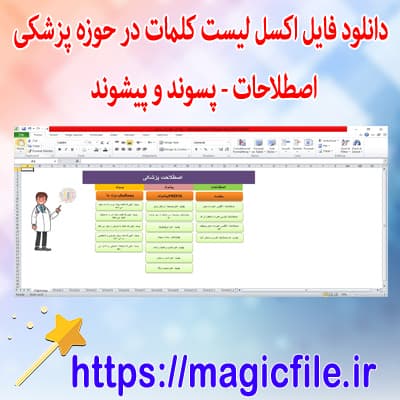
Medical Terminology in English: A Comprehensive Overview
Medical terminology is an intricate and specialized language that healthcare professionals use to communicate precisely and efficiently regarding the human body's health, diagnosis, treatment, and research. It encompasses a vast array of words, prefixes, suffixes, and roots derived primarily from Latin and Greek origins. These terms serve to reduce ambiguity, facilitate clear communication, and ensure consistency across various medical disciplines.
Understanding medical terminology is essential for students, practitioners, and even patients. It allows for accurate documentation, effective interdisciplinary collaboration, and improved patient care. The complexity of these terms often stems from their layered structure—combinations of prefixes, roots, and suffixes—each adding specific meanings. For example, the term "hypertension" combines "hyper-" meaning excessive, and "-tension" meaning pressure, thus referring to elevated blood pressure.
ROOTS AND BASE WORDS
At the core of most medical terms are roots, which generally denote a body part, condition, or process. For instance, "cardi" relates to the heart, "nephr" to the kidney, and "derm" to the skin. These roots form the foundation for more complex words. Recognizing these roots helps in deciphering unfamiliar terms and understanding their meanings.
PREFIXES AND THEIR FUNCTIONS
Prefixes are added at the beginning of roots to modify their meanings. For example, "brady-" indicates slow, as in "bradycardia" (slow heart rate), while "tachy-" indicates rapid, as in "tachypnea" (rapid breathing). Other common prefixes include "hypo-" (below normal), "hyper-" (above normal), "inter-" (between), and "post-" (after). These prefixes often provide critical information about the severity, location, or timing of a condition.
SUFFIXES AND THEIR SIGNIFICANCE
Suffixes often denote the nature of a disease, procedure, or condition. For example, "-itis" indicates inflammation (e.g., "arthritis" – inflammation of the joints), "-ectomy" signifies surgical removal (e.g., "appendectomy" – removal of the appendix), and "-oma" refers to tumors (e.g., "melanoma" – a type of skin cancer). Recognizing suffixes helps in understanding both the pathology and the treatment approach.
COMBINING FORMS AND LINKING Vowels
To ease pronunciation and combination, many terms incorporate combining vowels like "o" or "i." For example, "gastr/o" combines "gastr" (stomach) with "o" for smoother pronunciation, forming "gastroenterology," the study of the stomach and intestines. These forms are vital for constructing complex terms and are fundamental to the language's flexibility.
COMMON MEDICAL TERMS AND THEIR EXPLANATIONS
Medical vocabulary is filled with terms that describe various conditions, procedures, and anatomy. For instance, "hypertension" signifies high blood pressure; "hypoglycemia" refers to low blood sugar levels; "bronchoscopy" is a procedure to examine the airways; and "osteoporosis" describes weakened bones prone to fractures.
Another example is "neurology," which pertains to the nervous system, including the brain, spinal cord, and nerves. The term "cardiology" focuses on the heart and blood vessels, whereas "dermatology" concerns the skin. Each specialty has its unique set of terminologies, but they all follow similar structural rules.
DIAGNOSTIC AND TREATMENT-RELATED TERMS
Many medical terms are related to diagnostics and therapies. For example, "electrocardiogram" (ECG) records the electrical activity of the heart, whereas "angioplasty" involves the repair of blood vessels. "Immunotherapy" refers to treatments that enhance or suppress the immune system, often used in cancer management.
Similarly, "radiotherapy" employs radiation to treat disease, while "chemotherapy" involves chemical agents. These terms are integral to understanding the scope of modern medicine and the variety of interventions available.
INFLAMMATORY AND INFECTIOUS DISEASE TERMS
Infections and inflammations are common in medicine, and their terminology reflects their diverse nature. For example, "pneumonia" is an infection of the lungs, "meningitis" inflames the membranes surrounding the brain and spinal cord, and "sepsis" involves a systemic inflammatory response to infection. Recognizing these terms enables timely diagnosis and treatment.
CHRONIC AND ACUTE CONDITIONS
Medical terminology also distinguishes between the duration and severity of diseases. "Acute" refers to sudden, severe conditions, like "acute appendicitis," while "chronic" describes long-lasting, persistent conditions such as "chronic obstructive pulmonary disease" (COPD). These distinctions influence treatment approaches and prognosis.
SYSTEMATIC ORGAN AND BODY PART TERMINOLOGY
The body is divided into systems—cardiovascular, respiratory, digestive, nervous, musculoskeletal, and more. Each system has specific terminology. For example, "myocardial infarction" (heart attack) affects the heart muscle; "bronchitis" involves inflammation of the bronchi; "gastric ulcer" pertains to stomach sores; and "cerebral hemorrhage" involves bleeding in the brain.
Understanding these terms enhances comprehension of disease processes and facilitates effective communication among healthcare workers.
ABBREVIATIONS AND ACRONYMS
Medical terminology also encompasses numerous abbreviations like "BP" for blood pressure, "HR" for heart rate, "CBC" for complete blood count, and "MRI" for magnetic resonance imaging. While helpful, these abbreviations require careful usage to prevent misunderstandings.
CONCLUSION
In conclusion, medical terminology is a complex yet systematic language designed to convey detailed and precise information about health, disease, and treatment. Its roots in Latin and Greek, combined with prefixes, suffixes, and combining vowels, create a vast lexicon that allows healthcare professionals to communicate effectively. Mastery of this terminology is essential not only for medical practitioners but also for students, researchers, and even patients seeking to understand their health better. As medicine continues to evolve, so too will the language, expanding and adapting to new discoveries and technological advancements. Understanding and utilizing this terminology accurately improves patient care, fosters collaboration, and advances medical science as a whole.